
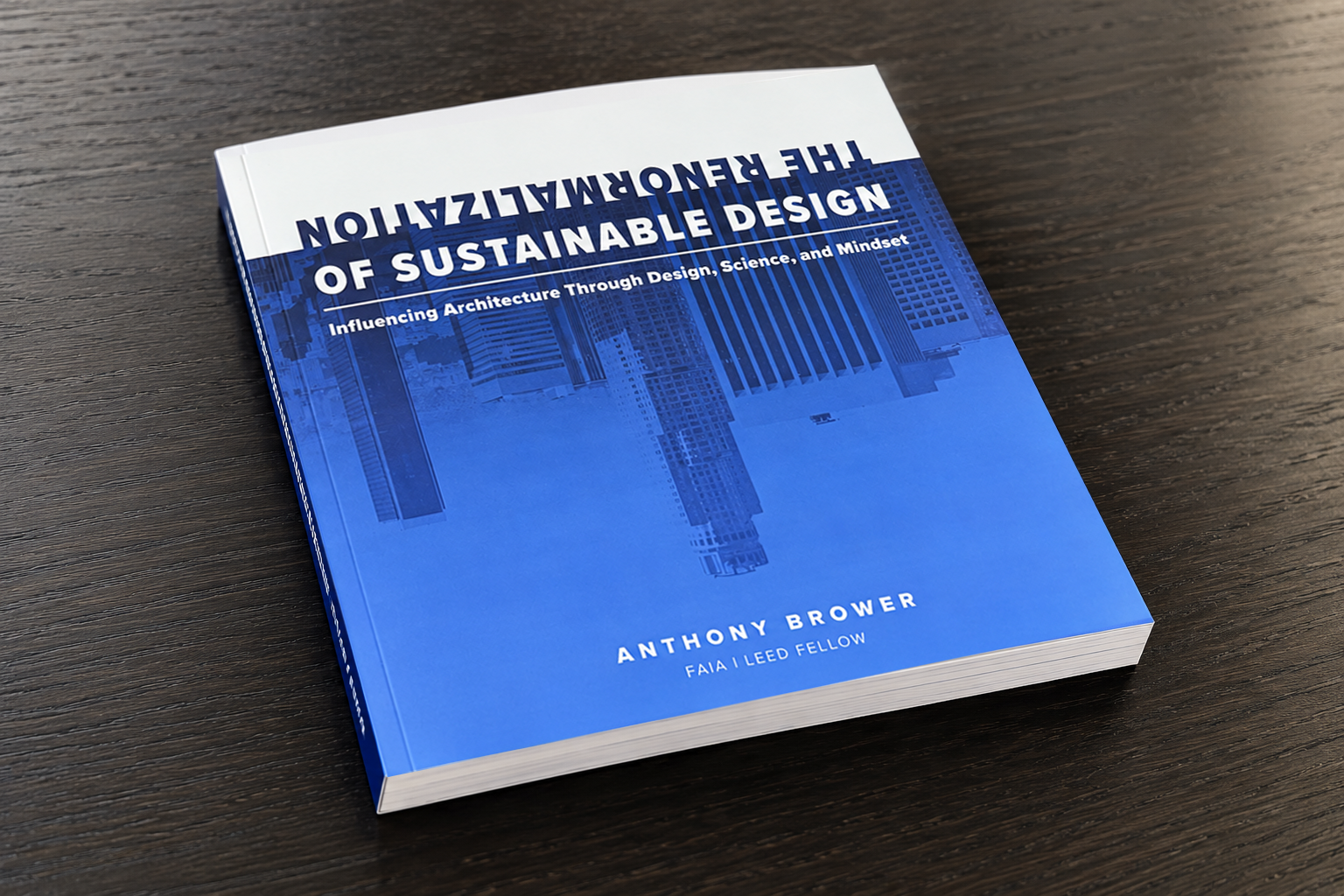
A field guide to climate-first design thinking that turns complex sustainability concepts into practical design instincts.
A Different Entry Into Sustainability.
Most sustainability conversations begin with solutions: technologies, certifications, products, targets, and metrics.
This book begins somewhere else.
The Renormalization of Sustainable Design explores the environmental intelligence already embedded in ordinary architectural decisions. Orientation. Geometry. Material. Space. Comfort. Adaptability. Even the things we choose not to build.
Across a series of short essays, the book asks readers to look more closely at familiar design decisions, understand the forces and consequences behind them, and choose differently once those relationships become visible.
The premise is simple: responsible design becomes more powerful when it stops feeling like an additional layer of expertise and starts becoming part of how we see architecture in the first place.
A Few Ideas From the Book
-
Building One-hour Taller
What happens when a regulation follows the clock while the sun follows something else?
-
Thermal Memory
Materials do more than occupy space. They absorb, hold, and release the conditions around them.
-
Extinction-level Parking Events
What should a parking structure become when we no longer need it for parking?
-
Losing Touch
What changes when digital design separates us from the physical consequences of making?
-
Awe
Can an emotional response to place influence how we value and protect the world around us?
-
Hope
Different people need different reasons to believe change is possible.
For people who shape the built environmentThe book is written for architects, designers, engineers, students, educators, clients, developers, and anyone interested in how buildings influence the world around them.
You do not need to be a sustainability specialist.
In fact, that is part of the point.

Anthony Brower
FAIA, LEED Fellow
An architect, educator, writer, and sustainability leader whose career has focused on translating environmental complexity into practical design thinking.
Over more than three decades of practice, he has worked across multiple building types, led interdisciplinary sustainability teams, taught architecture students, published extensively, and spoken internationally about the relationship between design, climate, and human experience.
At the center of his work is a simple question: How do we make better decisions once we learn to see differently?
Book Talks
A limited series of presentations built around ideas from The Renormalization of Sustainable Design.
The 60–90 minute session is intended for AIA chapters and COTE groups, architecture and engineering firms, universities and design programs, sustainability organizations, and other industry groups.
The session explores several ideas from the book through stories, design observations, and practical examples intended to start discussion.
If the hosting organization wishes to offer continuing education AIA/HSW credit, supporting content and learning objectives can be provided for submission.
Mailing List.
The Renormalization of Sustainable Design is currently in the final stages of development.
Join the advance release list to be among the first notified when the book becomes available for purchase, along with occasional updates as publication approaches.